
The ongoing conflict involving the United States, Israel, and Iran intensified sharply with attacks on critical energy infrastructure across the Gulf, even as US President Donald Trump said he had cautioned Israeli Prime Minister Benjamin Netanyahu against targeting Iran's key South Pars Gas Field.

Donald Trump has issued a stern warning to Iran, threatening massive retaliation if it attacks Qatar again, following reports of an Israeli strike on Iran's South Pars gas field and an attack on Qatar's LNG facilities.

After the Israeli attack on Iran's South Pars Gas Field on Wednesday night, in retaliation, Iran struck Qatar's Ras Laffan Industrial City, resulting in extensive damage, as per the country's Ministry of Defence.


Amidst escalating tensions in West Asia, India strongly condemns the recent attacks on energy infrastructure, warning of further destabilisation to the already uncertain global energy market.
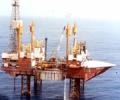
State-own oil explorer Oil and Natural Gas Corporation and the Hinduja group have been offered 40 per cent stake in the development of phase-XII of the giant South Pars gas field of Iran.

Amidst the escalating conflict in West Asia, India is actively engaged in diplomatic efforts to protect its energy security interests and ensure the safety of its diaspora in the region.

For weeks, the war skirted the edge of catastrophe without tipping over. Missiles flew, there was much destruction, commanders were assassinated, cities across the Gulf and even in Israel struggled to absorb the shock. But one line held: Energy infrastructure, the arteries of the global economy, remained largely untouched. That is no longer true. Prem Panicker continues his must read daily blog on the Gulf War.

Alliances fight wars effectively only when they share an endgame. If Israel acted without US knowledge, then the military alliance is operating without real coordination at the level of strategic targeting. Neither picture is reassuring in a war that is no longer regional in its consequences. Prem Panicker continues his must read daily blog on the Gulf War.

The Ministry of External Affairs has confirmed that nearly 880 Indian nationals, including students, have been evacuated from Iran via Armenia and Azerbaijan due to the ongoing conflict in West Asia.

The West Asia conflict escalated sharply as Iran launched missiles towards Israel, while Tehran confirmed the killing of its intelligence minister in Israeli strikes, marking the third assassination of a senior Iranian official in two days.
India addresses the escalating conflict in West Asia, outlining its diplomatic efforts to ensure energy security, the safety of its citizens, and advocating for a peaceful resolution through dialogue.
The ONGC-Hinduja combine would meet Iranian the authorities around mid-April to finalise 'participating agreement' for the development of Phase-12 of the giant South Pars gas field and South Azadegan oilfield, ONGC Chairman and Managing Director R S Sharma told reporters in New Delhi on Wednesday. The consortia was in Tehran earlier this month to do technical due diligence for the two fields but ended up being shown old data for the Phase-12 and no data of South Azadegan.
In its biggest ever investment abroad, state-run Indian Oil Corporation has clinched a $3 billion deal to develop a gas block in the gigantic South Pars gas field of Iran and sell LNG from it.
If the IPI deal wins out, then it will send an uplifting message about Indo-Pak collaboration, but also a sobering one about America's international clout.
GAIL has already been appointed as the nodal agency for the pipeline in India.

The US Government Accountability Office, in a recently released report, moved ONGC Videsh Ltd, the overseas arm of state explorer Oil and Natural Gas Corporation, and three others, including Petronet LNG Ltd, out of the list.
A decision on the multi-billion dollar gas pipeline between Iran and India, which will pass through Pakistan will be made in two weeks, a senior Iranian minister said in Kuala Lumpur on Monday.

'Qatar has been funding and supporting terrorist organisations.' 'It has used its media to spread lies and create unrest in neighbouring countries.'
'Greenpeace has been brutal in targeting both India and the Manmohan Singh government. The push to go after Indian coal is driven by its long-term agenda. What is surprising is that China has not been meted out the same treatment, despite the fact that the rise of China as an economic power has been built around generating power from coal. 'Being richer and more affluent, yet far less democratic, there is less room for an NGO such as Greenpeace to drive home a complicated global agenda, so there is more of a tendency to go along with anything the Chinese offer despite China being the biggest by far with regard to coal use. But for India, it reserves tougher prescriptions, notably for its middle class, says Srinivas Bharadwaj.

Prem Panicker, a keen follower of the game and one of cricket's finest writers, analysed, debated and dissected the four semi-finalists on the Rediff World Cup Chat on Monday.

President Pranab Mukherjee on Monday addressed the first joint sitting of Parliament as mandatorily required under the Constitution after the general elections. The address is the political, economic and foreign policy road map of the Narendra Modi government and covers virtually all crucial areas.
 © 2026 Rediff.com - Advertise with us - Disclaimer - Privacy Policy - Sitemap - Feedback - About us - Terms of use - Grievances